What is a 4-week MVP?
A 4-week MVP is a tightly scoped version of your product built to validate product-market fit quickly by focusing only on the core user flow and measurable outcomes using lean startup and rapid prototyping principles.
Most startups don’t fail because of poor development.
They fail because they validate too late.
Across Europe, founders are under pressure to move faster, prove traction earlier, and use capital more efficiently. A properly scoped Minimum Viable Product (MVP) reduces risk by turning assumptions into measurable signals — in just 30 days.
Here’s exactly how to scope and launch an MVP in four weeks, without overbuilding.
What a 4-Week MVP Actually Means
A 4-week MVP is not a rush job.
It is a controlled exercise aimed at finding the answer to a simple question: “Do real users interact with this solution and pay for it?”
This is based on the principles of the Lean Startup methodology, agile sprint planning, and early product validation.
You are not building a product.
You are validating demand.
The 4-Week MVP Scoping Framework
Week 0 – Define Core Hypothesis
Before the development of the product, it is necessary to define the following:
- Target User
- Core Pain Point
- Proposed Solution
- Clear Success Metric
Example Hypothesis:
“Early-stage eCommerce brands will pay for an automated competitor price alerts solution as manual tracking is inefficient.”
Define Success Criteria:
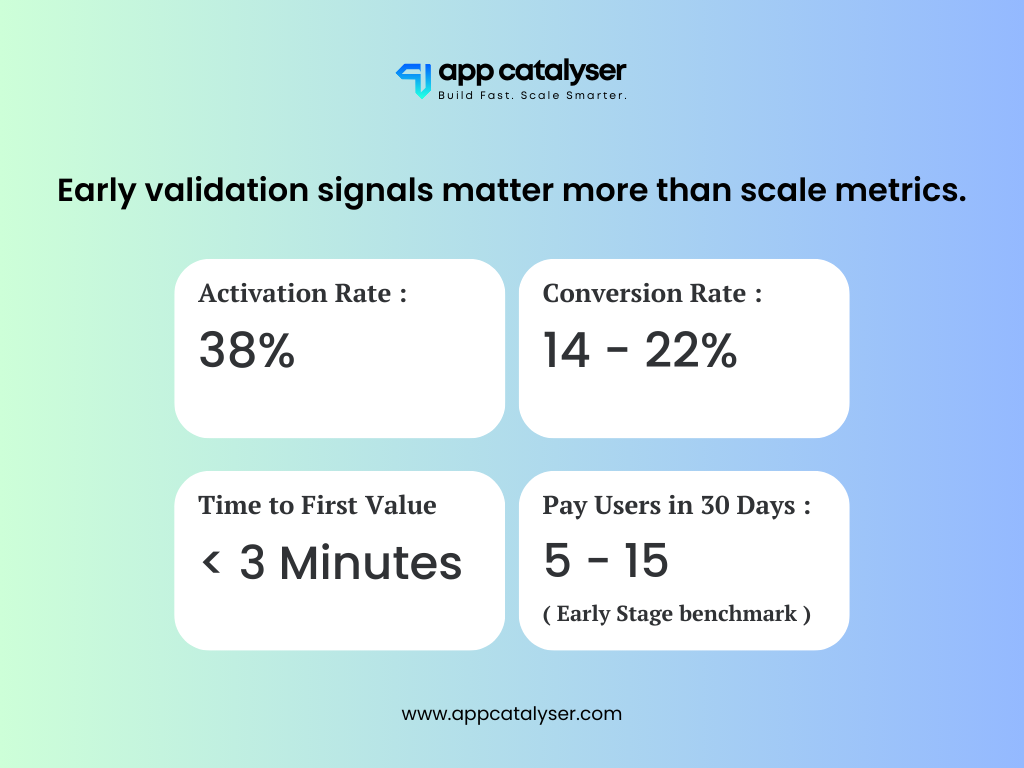
- 20+ activated users
- 10+ demo calls
- 5+ paying customers
If not, scope will grow out of control.
Week 1 – Ruthless Scope & Technical Setup
This is where discipline is required.
Determine the key user flow: What is the minimum path from signup to value delivered?
Then:
- Categorize your features: Must Have / Nice to Have / Later
- Kill those that don’t validate your hypothesis
- Choose the fastest tech stack: No-code / Low-code / Lean Custom
- Implement analytics first before building
Rapid prototyping is the goal here; don’t worry too much about scalable architecture.
If it doesn’t directly validate demand, don’t build it.
Week 2 – Build the Thin Slice
This is the time to build only what is necessary.
What to focus on:
- Authentication
- Core function
- Basic but functional interface
- Necessary payment or booking functionality (if necessary)
What not to do:
- Advanced dashboard
- Complex automation
- Scalability engineering
Perfection is not the goal. Validation is.
Week 3 – Private Beta & Friction Removal
Invite early adopters:
- Warm leads
- Industry contacts
- Existing network
- Early believers
What to track:
- Activation rate
- Drop-off points
- Time to value
- Feedback patterns
Fix trust-breaking issues. Don’t build based on opinions. Only build based on data.
Week 4 – Launch & Measure
Launch publicly.
Monitor:
- Signups
- Activation
- Conversion
- Retention
- Qualitative feedback
MVP is successful if it creates clarity, not if it looks cool.
Real 4-Week MVP Examples (With Results)
Example 1 – SaaS Pricing Alert Tool
Hypothesis:Retailers are willing to pay for an automated price tracking tool.
Timeline:
- Week 1: Defined the core flow (uploading URLs, receiving alerts)
- Week 2: Built the scraper for 3 domains, including email alerts
- Week 3: Built the beta with 15 users
- Week 4: Implemented Stripe, launch
Results After 30 Days (Validated Product-Market Signal):
- 42 trial users
- 14 conversions
- Monetization potential
The dashboard was basic. The alerts were partially manual.
Users still paid.
Example 2 – B2B Marketplace Validation MVP
Instead of building a full platform:
- Landing page
- Application form
- Manual supplier matching
- Email-based onboarding
Results in 4 Weeks:
- 27 qualified applications
- 6 paid transactions
- Strong validation before platform build
You can validate a marketplace without building a marketplace.
Example 3 – Concierge B2C MVP
Instead of building an app:
- Users completed a form
- Founder manually delivered outputs
- Payments collected manually
Outcome in 30 Days:
- 100 signups
- 18 paying customers
- Clear feature prioritization insights
No automation. Just proof.
Common Mistakes That Kill 4-Week MVP Timelines
- Adding features “just in case.”
- Automating too early
- Ignoring analytics setup
- Expanding scope during beta
- Delaying launch for Polish
An MVP is not about reputation.
It’s about validated learning.
The Only Metrics That Matter in Month One
Don’t waste time on vanity metrics. Focus on:
Track:
- Activation: Did users have the value moment?
- Retention: Did users come back?
- Conversion: Did users commit or pay?
- Qualitative understanding: Why or why not?
This is what matters for product-market fit, not traffic.
How to Scope Your MVP the Right Way (Without Wasting 6 Months)
Most founders are not struggling with the technical side of things. They are struggling with clarity.
If you have an MVP with:
- Multiple key user flows
- Advanced automation before validation
- Features based on assumption
Then you are over-building.
The goal of the structured MVP scoping process is to help you get:
- A validated hypothesis
- A prioritized feature map
- A measurable success framework
- A 4-week sprint plan
If you are about to launch and need help ensuring your MVP is scoped correctly, not just for complexity, but for speed and validation, then a focused strategy session can help you compress months of uncertainty into weeks of clarity.
Final Thoughts: Speed Is a Strategic Advantage
In today’s European startup environment, speed is not reckless — it’s responsible.
The longer you delay validation, the more capital you risk.
The more features you build before testing, the more assumptions you fund.
A well-scoped 4-week MVP forces clarity:
- One core hypothesis
- One primary user flow
- One measurable outcome
- One clear validation decision
It removes ego from product development and replaces it with evidence.
The real competitive advantage isn’t building more.
It’s learning faster.
If your current roadmap feels overloaded, unclear, or stretched beyond 30 days just to “get something out,” that’s not a development issue — it’s a scoping issue.
And scoping is fixable.
Ready to Scope Your MVP the Right Way?
If you’re preparing to launch and want to ensure your MVP is built for validation — not overengineering — a focused MVP scoping session can help you:
- Clarify your core hypothesis
- Eliminate unnecessary features
- Define measurable success criteria
- Create a realistic 4-week sprint plan
Instead of spending 6–9 months building something uncertain, you can gain clarity in weeks.
If that’s the direction you want to take, now is the right moment to get the scope right — before writing another line of code.
Frequently Asked Questions (FAQ)
How long does it take to properly scope out an MVP?
With discovery and success metrics in place, it can be accomplished in 5-7 days.
Can I build an MVP without developers?
Yes, many times, especially in the initial phases of a startup, there are no developers involved in building the MVP.
How much does a 4-week-long MVP cost?
The cost of a lean MVP is low because validation is prioritized, not scalability.
When should I skip building an MVP?
When the demand is already known, and the focus is on scalability, not validation.